Ocean Zones Explained: The 5 Layers of the Sea, and 60+ Creatures That Live in Each
The ocean is divided into five zones by depth: the sunlight zone (0–200 m), where light still reaches and around 90% of marine life lives; the twilight zone (200–1,000 m), where animals make their own light; the midnight zone (1,000–4,000 m), in permanent darkness; the abyssal zone (4,000–6,000 m), covering the vast muddy plains; and the hadal zone (6,000–11,000 m), found only in ocean trenches. Below are 60+ creatures grouped by the zone they actually live in.
Depth is the single thing that decides what an ocean animal looks like. Light runs out at around 200 metres, food gets scarcer the further you go, and pressure rises by roughly one atmosphere every ten metres. Every strange body plan in the deep is an answer to one of those three facts.
So this guide is organised by depth rather than alphabetically or by species. Start at the surface with the animals you already recognise, and read downward. The further you go, the less the creatures look like anything you have seen, and the clearer it becomes why.
Sunlight Zone Animals (0–200 m)
The top 200 metres. Enough light reaches here for plants and algae to grow, which is why roughly 90% of all known marine life lives in this thin band, and why almost everything you can picture when you picture the sea is on this list.
Clownfish
Shelters inside anemone tentacles that sting almost every other fish
Bottlenose Dolphin
Hunts by echolocation: clicks, then listens for the echo
Green Sea Turtle
Grazes on seagrass; one of the few reptiles that eats plants
Manta Ray
Up to 7 m across, and filters plankton with its mouth held open
Whale Shark
The largest fish alive, and a harmless plankton feeder
Humpback Whale
Sings long repeating songs that carry for miles underwater
Emperor Penguin
A bird that flies underwater, diving past 500 m on one breath
Great White Shark
Keeps its body warmer than the sea so it can strike faster
Common Octopus
Three hearts, blue blood, and skin that recolours in under a second
Moon Jellyfish
No brain, no heart, no bones, and about 95% water
Seahorse
The male carries the eggs and gives birth to the young
Parrotfish
Grinds coral with a beaked mouth; its droppings become white sand
Sea Otter
The densest fur of any animal, up to a million hairs per square inch
Flying Fish
Glides above the surface for 200 m at a time to escape predators
Reef-Building Coral
An animal that farms algae inside its own tissue for food
Leafy Sea Dragon
Disguised as a drifting clump of seaweed, right down to the sway
Twilight Zone Animals (200–1,000 m)
Light fades to a dim blue and then to nothing. Nothing grows down here, so most animals either rise to feed at night or wait for food to fall, and almost all of them make their own light.
Lanternfish
Likely the most numerous vertebrate on Earth, studded with light organs
Hatchetfish
Paper-thin silver sides that mirror the water and erase its outline
Barreleye
A transparent head with tubular eyes that rotate to look straight up
Vampire Squid
Neither squid nor octopus; eats drifting "marine snow", not live prey
Giant Squid
Eyes the size of dinner plates, the largest in the animal kingdom
Sperm Whale
Dives past 1,000 m and can hold its breath for over an hour
Swordfish
Heats its own eyes and brain to keep reacting in near-freezing water
Cookiecutter Shark
Bites round plugs of flesh out of animals far larger than itself
Snipe Eel
A ribbon-thin body with jaws that curve apart like tweezers
Bristlemouth
A finger-length fish thought to number in the hundreds of trillions
Strawberry Squid
One huge upward eye for shadows, one small downward eye for glints
Pyrosome
A drifting tube made of thousands of clones, glowing a soft blue
Chambered Nautilus
Floods and empties its shell chambers to sink and rise, like a submarine
Midnight Zone Animals (1,000–4,000 m)
Total darkness, near-freezing water and crushing pressure. Food is scarce enough that the bodies down here are built around one problem: catching anything at all, however big, on the rare occasion it passes.
Anglerfish
Dangles a lure lit by glowing bacteria in front of its own mouth
Gulper Eel
A jaw bigger than the rest of its body, for swallowing oversized prey
Fangtooth
The largest teeth relative to body size of any fish in the ocean
Viperfish
Needle teeth too long to close inside its own mouth
Atolla Jellyfish
Fires a spinning blue "burglar alarm" to lure something bigger onto its attacker
Black Swallower
Can swallow prey many times its own mass whole
Glass Squid
Almost entirely transparent apart from its eyes and gut
Dragonfish
Shines a red beam its prey has no way of seeing
Giant Isopod
A cat-sized crustacean that can go years between meals
Bigfin Squid
Elbowed arms trailing many times the length of its body
Blobfish
Firm and ordinary at depth; it only collapses when hauled to the surface
Cuvier's Beaked Whale
Holds the record for the longest mammal dive, over three hours
Goblin Shark
Launches its jaws forward off the front of its face to seize prey
Abyssal Zone Animals (4,000–6,000 m)
The abyssal plain covers more of the planet than every continent combined, and most of it is soft mud in permanent darkness. Life here is slow, sparse and strange, and much of it never leaves the seafloor.
Dumbo Octopus
Flaps two ear-like fins to swim, and lives deeper than any other octopus
Sea Pig
A walking sea cucumber that vacuums nutrients out of the mud
Tripod Fish
Stands on three stiff fin rays and waits for the current to bring dinner
Grenadier
A rat-tailed fish, and one of the most common on the deep seafloor
Yeti Crab
Farms edible bacteria on the hairs of its own claws beside hot vents
Giant Tube Worm
Has no mouth or gut; lives entirely on chemicals processed by bacteria
Sea Spider
Breathes through its legs, which also carry parts of its gut
Basket Star
Unfolds a mesh of branching arms to strain food from the water
Glass Sponge
Builds a silica lattice that can outlast a thousand years
Bone-Eating Worm
Drills into fallen whale skeletons and dissolves the bone for food
Ping-Pong Tree Sponge
A carnivorous sponge that snags tiny crustaceans on hooks
Venus Flytrap Anemone
Folds its tentacles shut around anything that drifts inside
Xenophyophore
A single cell that grows as large as your fist
Hadal Zone Animals (6,000–11,000 m)
Only the ocean trenches reach this deep, and the pressure at the bottom is over a thousand times what you feel at sea level. The list is short because the census is short. This is the least explored habitat on the planet.
Mariana Snailfish
Filmed past 8,000 m, the deepest fish ever recorded on camera
Hadal Amphipod
Swarms bait dropped into the Mariana Trench within hours
Supergiant Amphipod
Reaches 30 cm, dozens of times the size of its shallow-water cousins
Deep-Sea Cusk Eel
One was collected at 8,370 m, the deepest fish ever caught
Hadal Sea Cucumber
One of the few large animals grazing the floor of a trench
Trench Foraminifera
Single-celled shell builders that carpet the deepest sediment
Hadal Polychaete
Burrows through mud under pressure that would crush a submarine
Trench Anemone
Anchors to sheer trench walls in water barely above freezing
How the five ocean zones work
The zones are not arbitrary lines. Each boundary marks the point where a physical condition changes enough to change what can survive there.
Light
Red light is absorbed within the first few metres, which is why everything looks blue underwater and why deep-sea animals that are red are effectively invisible. By 200 m there is too little light for photosynthesis; by 1,000 m there is none at all. Everything below that line either produces its own light or does without.
Food
Almost nothing grows below the sunlight zone, so the deep ocean eats leftovers: a constant drift of dead plankton and waste called marine snow. Hydrothermal vents are the exception: bacteria there build food from chemicals instead of sunlight, which is why vent communities are crowded while the mud around them is nearly empty.
Pressure
Pressure rises by about one atmosphere every 10 metres. At the bottom of the Mariana Trench it is over a thousand times what you feel at the beach. Animals cope by having no air spaces to crush, which is exactly why a blobfish looks normal at 1,000 m and ruined at the surface.
Why the ocean makes sense in VR
Reading that a whale shark is 12 metres long does almost nothing. Numbers describe the ocean badly, because the thing that makes it overwhelming is scale, and scale is the one property a photograph cannot carry.
Virtual reality is unusually good at exactly that. A headset gives you true stereoscopic depth and a one-to-one sense of size, so an animal that is bigger than you feels bigger than you. Add the open water above and below and you get the part of diving that nobody can explain in text: the sense of being suspended in something enormous.
It is also the only practical way most people will ever do it. Recreational scuba certification tops out around 40 metres, which is still the sunlight zone. Everything from the twilight zone down is reachable only by submersible, or in simulation.
Exploring the ocean in Submarine VR
Submarine VR is our underwater exploration experience for Meta Quest. You pilot a submarine through an open ocean and go wherever you like. There is no timer, no fail state and no combat, which is deliberate. The point is to look at things.
On the way you will run into sea life from the upper zones, including clownfish, dolphins, penguins and other ocean animals, along the reefs and open water, with educational marine biology content attached to what you find. It is rated 4+, which makes it usable in a classroom or with younger family members without any editing.
If you have used this list with children, the natural way in is to dive first and read second: find an animal in the headset, then come back and look up which zone it belongs to and what it is doing there.
Staying comfortable in underwater VR
Underwater scenes move differently to standing games, since you drift in three dimensions rather than walking on a floor, so a few habits help if you are new to VR or prone to motion sickness.
- Sit down for your first session. A seated position gives your inner ear a stable reference and removes the mismatch that causes most discomfort.
- Turn with your head, not the stick. Physically looking around is free of motion sickness; smooth stick-turning is what usually triggers it.
- Keep something in view that is not moving. In an underwater scene, the seabed or the cockpit frame works as a horizon substitute.
- Move at a steady speed. Acceleration and sudden stops cause far more nausea than travelling quickly in a straight line.
- Stop at 15 minutes the first few times. VR tolerance builds quickly across sessions, but pushing through discomfort sets you back rather than forward.
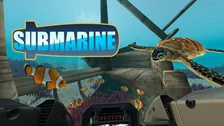
See the ocean at scale in Submarine VR
Dive deep and cruise through the endless uncharted nature of the ocean. Discover clownfish, dolphins, penguins and mysterious sea animals in this immersive underwater VR experience for Meta Quest.
Frequently Asked Questions
What are the five zones of the ocean?
+
The five ocean zones by depth are the sunlight (epipelagic) zone from 0 to 200 m, the twilight (mesopelagic) zone from 200 to 1,000 m, the midnight (bathypelagic) zone from 1,000 to 4,000 m, the abyssal zone from 4,000 to 6,000 m, and the hadal zone from 6,000 m down to roughly 11,000 m in ocean trenches.
What lives at the bottom of the ocean?
+
The deepest trenches are home to snailfish, amphipods, sea cucumbers, polychaete worms, anemones and single-celled foraminifera. The Mariana snailfish has been filmed past 8,000 m, and a cusk eel was collected at 8,370 m, the deepest fish ever caught.
How deep can sunlight reach in the ocean?
+
Enough sunlight for photosynthesis reaches to about 200 m, which is where the sunlight zone ends. Faint light continues to roughly 1,000 m in the twilight zone, and below that the ocean is in complete darkness apart from light the animals make themselves.
Why do deep sea creatures look so strange?
+
Three pressures shape them: no light, very little food and enormous water pressure. That produces oversized jaws and stomachs for eating rare, large meals, light-producing organs for luring prey and signalling, huge or missing eyes, and soft bodies with no air spaces that would otherwise be crushed.
Is the blobfish really that ugly?
+
No. At its home depth of around 1,000 m a blobfish looks like an ordinary fish. Its body is a low-density gel with no swim bladder, so bringing it to the surface causes it to collapse. The famous photograph shows decompression damage, not the living animal.
What is the best way to explore the deep ocean without diving?
+
A VR headset is the closest most people will get. Recreational scuba diving stops around 40 m, still within the sunlight zone, while a virtual reality experience such as Submarine VR on Meta Quest lets you cruise an open underwater world at your own pace and get a genuine sense of scale.
Is Submarine VR suitable for children and classrooms?
+
Yes. Submarine VR is rated 4+, has no combat and no fail state, and includes educational marine biology content, which makes it a good fit for family use and for classroom demonstrations of ocean habitats.
Which headsets does Submarine VR run on?
+
Submarine VR is built for Meta Quest headsets and is available from the Meta Store.