47 Ocean Facts for Kids, Grouped So You Can Actually Use Them
The ocean covers about 71% of the planet, holds roughly 97% of its water, and more than 80% of it has never been mapped in detail. It produces a large share of the oxygen we breathe, holds the largest animal that has ever lived, and contains a deep zone where sunlight never reaches and most animals make their own light. Below are 47 facts grouped by scale, animals, the deep sea and what the ocean does for us.
Most ocean fact lists are a scramble of numbers with nothing holding them together, which is why children remember two of them and forget the rest. Grouping fixes that. Each set below builds one idea, so the facts reinforce each other instead of competing.
Every entry has a short line of detail underneath, which is usually the part that makes it stick. "Octopuses have three hearts" is trivia. "Two of them feed the gills and one feeds the body" is the start of a question about how a body gets built.
How Big the Ocean Really Is
Scale is the first thing to get across, because every other ocean fact makes more sense once you know how much room there is.
The ocean covers about 71% of Earth
There is more sea than land on almost every map you can draw
It holds around 97% of Earth’s water
Rivers, lakes and ice put together are the small remainder
The average depth is about 3,700 m
Deeper than most mountains outside the great ranges are tall
The deepest point is nearly 11,000 m down
Mount Everest would fit in the Mariana Trench with room above it
More than 80% of it has never been mapped in detail
We have better maps of Mars than of our own seafloor
There is one ocean, not five
The five named oceans are one connected body of moving water
The longest mountain range is underwater
The mid-ocean ridge runs for about 65,000 km around the planet
The Pacific alone is bigger than all land combined
Every continent could fit inside it with space left over
Fewer people have reached the deepest point than the Moon
Only a handful of crewed dives have ever touched the bottom
The ocean holds about 20 million tonnes of gold
Dissolved so thinly that collecting it costs more than it is worth
Astonishing Ocean Animal Facts
The animals are where most children get hooked, so these are the ones worth having ready.
The blue whale is the largest animal ever
Bigger than any dinosaur, with a heart the size of a small car
A blue whale calf gains about 90 kg a day
That is roughly the weight of an adult person, every single day
Octopuses have three hearts and blue blood
Two hearts feed the gills and one feeds the rest of the body
An octopus can taste with its arms
Its suckers detect chemicals as well as grip
Starfish have no brain and no blood
They pump seawater around their bodies instead
A shrimp’s punch can boil the water around it
The mantis shrimp strikes fast enough to create a flash of light
Male seahorses give birth
The female passes her eggs to a pouch on the male, who carries them
Sea otters hold hands while they sleep
It stops the group drifting apart on the current
One jellyfish may be biologically immortal
Turritopsis can revert to an earlier life stage instead of dying of age
Some sharks are older than trees
Sharks have existed for over 400 million years, predating the first forests
A Greenland shark can live 400 years
The longest-lived vertebrate known, and slow to mature
Parrotfish poop makes white sand
They grind coral to eat the algae, and the ground rock comes out as sand
Dolphins sleep with half a brain at a time
One hemisphere rests while the other keeps them surfacing to breathe
Clownfish can change sex
If the female of a pair dies, the male becomes female
Whale song can travel for hundreds of kilometres
Low frequencies carry through water far better than through air
Facts About the Deep, Dark Sea
Below the point where light runs out, the ocean stops resembling anything you would recognise from the beach.
Sunlight runs out at about 200 m
Below that, nothing can grow using light, so food has to fall from above
Red is the first colour to disappear
Which is why red deep-sea animals are effectively invisible down there
Most deep-sea animals make their own light
Bioluminescence is used for luring prey, hiding, and signalling
Food falls from above as "marine snow"
A constant drift of dead plankton and waste feeds the whole deep sea
One dead whale feeds a seafloor community for decades
Whale falls support animals that live nowhere else
Hot vents host life that never needs the sun
Bacteria there build food from chemicals instead of sunlight
Vent water can exceed 350 °C without boiling
The pressure at depth is far too high for it to turn to steam
Pressure rises one atmosphere every 10 m
At the deepest trench it is over a thousand times surface pressure
The blobfish only looks odd out of water
At its home depth it is an ordinary-looking fish
Some anglerfish males fuse to the female
He attaches permanently and becomes a part of her body
The giant squid has eyes the size of dinner plates
The largest eyes of any animal, for spotting faint glows
Deep-sea creatures can live for centuries
Cold and scarce food mean everything grows and ages slowly
What the Ocean Does For Us
The last group is the one that turns a fun fact list into a reason to care about it.
The ocean produces most of our oxygen
Marine plankton generate an estimated half or more of every breath
It absorbs about a quarter of our carbon dioxide
Which slows warming, but makes the water more acidic
Ocean currents set the weather on land
Northwest Europe is mild for its latitude because of one current
The ocean stores enormous amounts of heat
The top few metres hold as much heat as the whole atmosphere
Coral reefs cover under 1% of the seafloor
Yet roughly a quarter of all marine species depend on them
Tides are caused by the Moon
Its gravity pulls the ocean into a bulge that Earth rotates through
Most of the internet travels under the sea
Undersea cables carry the overwhelming majority of global data
Around three billion people rely on the sea for protein
Fish is the primary animal protein source for much of the world
Plastic has reached the deepest trench
Debris has been filmed at the bottom of the Mariana Trench
Sea level is rising as water warms
Warm water expands, so the ocean takes up more room than it did
Four ocean facts almost everyone gets wrong
Some of the most repeated ocean facts are not quite right, and correcting them is usually more interesting than the original.
- The Amazon rainforest is not "the lungs of the planet". Marine plankton produce an estimated half or more of the oxygen in the atmosphere, and a mature forest consumes roughly as much as it makes.
- The blobfish is not ugly. The famous photograph shows a fish that has been pulled up from around 1,000 m and decompressed. At home it looks perfectly ordinary.
- There are not really five oceans. The named oceans are administrative labels on one connected body of water, and currents move continuously between all of them.
- Sharks are not mindless. Many species show individual personalities, social structure and problem-solving, and only a handful of the 500-plus species are ever a risk to people.
Turning these into a lesson or a school project
Facts land better when a child has to do something with them. A few formats that work with the groups above:
Build a depth chart
Draw a vertical strip of paper as a slice of ocean and mark 200 m, 1,000 m and 4,000 m across it. Place each animal at the depth it lives. The picture of "everything familiar sits in the top band" arrives without anyone having to say it.
Ask why, not what
Every fact in the deep-sea group has a cause behind it. Why are deep-sea fish red? Why are their eyes huge? Why do so many of them have oversized jaws? Each answer is light, food or pressure, so a child can work out the third one after being shown the first two.
Pick one animal each
One fact per child, presented in a minute, with a drawing. Grouped lists work well for this because you can hand out a whole zone and end up with a complete habitat on the wall.
Seeing the ocean instead of reading about it
The one thing a fact list cannot deliver is scale. "A blue whale is 30 metres long" is a number, and numbers are exactly what children are worst at converting into a feeling. Standing next to something and having to look up is what does it.
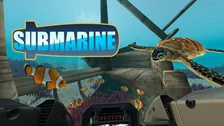
Submarine VR is our underwater exploration experience for Meta Quest. You pilot a submarine through an open ocean at your own pace, with no combat, no timer and no way to lose, and you meet sea life including clownfish, dolphins and penguins along the way, with educational marine biology content attached to what you find.
It is rated 4+ and has no level structure, so a session can be five minutes or twenty without anyone losing progress, which makes it straightforward to pass a headset around a classroom. One practical note: game age ratings and headset age requirements are separate things, so check the Meta Quest minimum age as well as the store listing before using one with younger children.
Take the class underwater
Dive deep and cruise through the endless uncharted nature of the ocean. Discover clownfish, dolphins, penguins and mysterious sea animals in this immersive underwater VR experience for Meta Quest.
Frequently Asked Questions
What are some fun ocean facts for kids?
+
The ocean covers about 71% of Earth and holds around 97% of its water. Octopuses have three hearts and blue blood, male seahorses give birth, sea otters hold hands while sleeping so they do not drift apart, and the blue whale is the largest animal that has ever lived, larger than any dinosaur.
How much of the ocean has been explored?
+
More than 80% of the ocean has never been mapped or observed in detail. We have more detailed maps of the surface of Mars and the Moon than of our own seafloor, largely because radar and cameras cannot see through water and every survey has to be done by sound from a ship or a robot.
What is the biggest animal in the ocean?
+
The blue whale, which reaches about 30 metres and is the largest animal known to have ever existed, bigger than any dinosaur. Its heart is roughly the size of a small car, and a calf can gain around 90 kilograms a day while nursing.
Where does most of our oxygen come from?
+
From the ocean. Marine plankton, particularly tiny photosynthetic organisms near the surface, are estimated to produce half or more of the oxygen in Earth’s atmosphere, which is more than all land forests combined.
Why is the deep ocean dark?
+
Water absorbs light quickly, and it absorbs different colours at different rates. Red disappears within a few metres and blue penetrates furthest, but by about 200 metres there is too little light for plants to grow and by 1,000 metres there is none at all. Anything visible below that is light an animal made itself.
What is the deepest part of the ocean?
+
The Challenger Deep in the Mariana Trench, at nearly 11,000 metres. If Mount Everest were placed in it, the peak would still sit more than two kilometres below the surface. Only a handful of crewed vessels have ever reached the bottom.
Are these ocean facts suitable for a school project?
+
Yes. The facts are grouped by theme rather than listed at random, so a project can take one group as its structure: ocean scale, marine animals, the deep sea, or what the ocean does for the planet. Each fact has a short line of detail behind it that can be expanded into a paragraph.
Is there a way for children to explore the ocean in VR?
+
Submarine VR is an underwater exploration experience for Meta Quest, rated 4+, with no combat and no fail state. Children pilot a submarine through an open ocean and encounter sea life with educational marine biology content. Check the Meta Quest headset age requirement separately, as it is set by the platform rather than by the individual experience.